

RoadGuard
RoadGuard

Grading the grader

Measuring what the blade achieves on the haul roads of one of the world’s biggest gold mines

At NMMC’s Muruntau mine, RoadGuard units on the haul trucks track road condition before and after every grading job.

International Mining · November/December 2026 · pp. 32–35Shorter version in International Mining. Full article by RoadGuard Solutions and NMMC.
Figure 1. A RoadGuard unit (inset) on Cat 793D haul truck 188 at Muruntau. Photo: NMMC.
Muruntau, UzbekistanRoadGuard Solutions × NMMC
Instrumented haul trucks
3
Cat 793D, Komatsu and BELAZ
GPS-tracked graders
6 of 13
Grader tracking from early August
Of measured driving
59,625 km
Haul trucks: 18 June – 22 September 2026

What the blade achieves. And where it reaches its limit.

Most open-pit mines grade their haul roads without knowing how well it works.

01Muruntau pilot

The gain holds.

The day after, it is 7% smoother, and it is still 6 to 8% smoother two weeks later (Figure 6).

Against the road’s own previous week after its main job. The per-grading-day median was 4.2%; the effect is best read as several percent.

How long grading lasts
02Muruntau pilot

The road class sets the job.

On most roads the measurable gain sits in the first visit.

The class-based schedule is a proposal to test. Spillage, drainage and safety still take priority.

Grading by road class
03Muruntau pilot

Some roads need repair.

A third, 34%, went to stretches where repeated grading brought no lasting gain (Figure 12).

272 of 810 blade hours on measured road. These are repair candidates; road engineers decide what each one needs.

When roads need repair

Maarten Baan and Gert Dam work for RoadGuard Solutions, which supplies the system described here.

Measured findings. A plan still to test.

The pilot cannot establish how long a job lasts on the busiest roads. A proposed one-month corridor trial is the next step.

Get the full methodology
Measured
What grading did to road condition, where the blade hours went, and how long the gain held on quieter roads.
Modelled
46–58% of blade hours could be freed on roads graded today, if the proposed schedule holds condition. Grader travel between jobs is not included.
Still to establish
How long a job lasts on the busiest roads. Fuel and tyre effects were not measured. Seven of 13 graders were not tracked.

What could the same measurements show at your mine?

Discuss a pilot

Grading the grader

Get the full article

Maarten Baan and Gert Dam, RoadGuard Solutions; Rustam Makhmudovich Ergashev, Nodir Nosirovich Sharipov and Maksim Mamasalievich Khasanov, NMMC

Most open-pit mines grade their haul roads without knowing how well it works. At NMMC’s Muruntau mine, RoadGuard units on the haul trucks track road condition before and after every grading job. The early data shows that a job’s gain holds for two weeks, that the right job depends on the road class, and that graders are returning sooner than the roads seem to need.

First published in shorter form in International Mining, November/December 2026, pages 32 to 35. Maarten Baan and Gert Dam work for RoadGuard Solutions, which supplies the system described here.
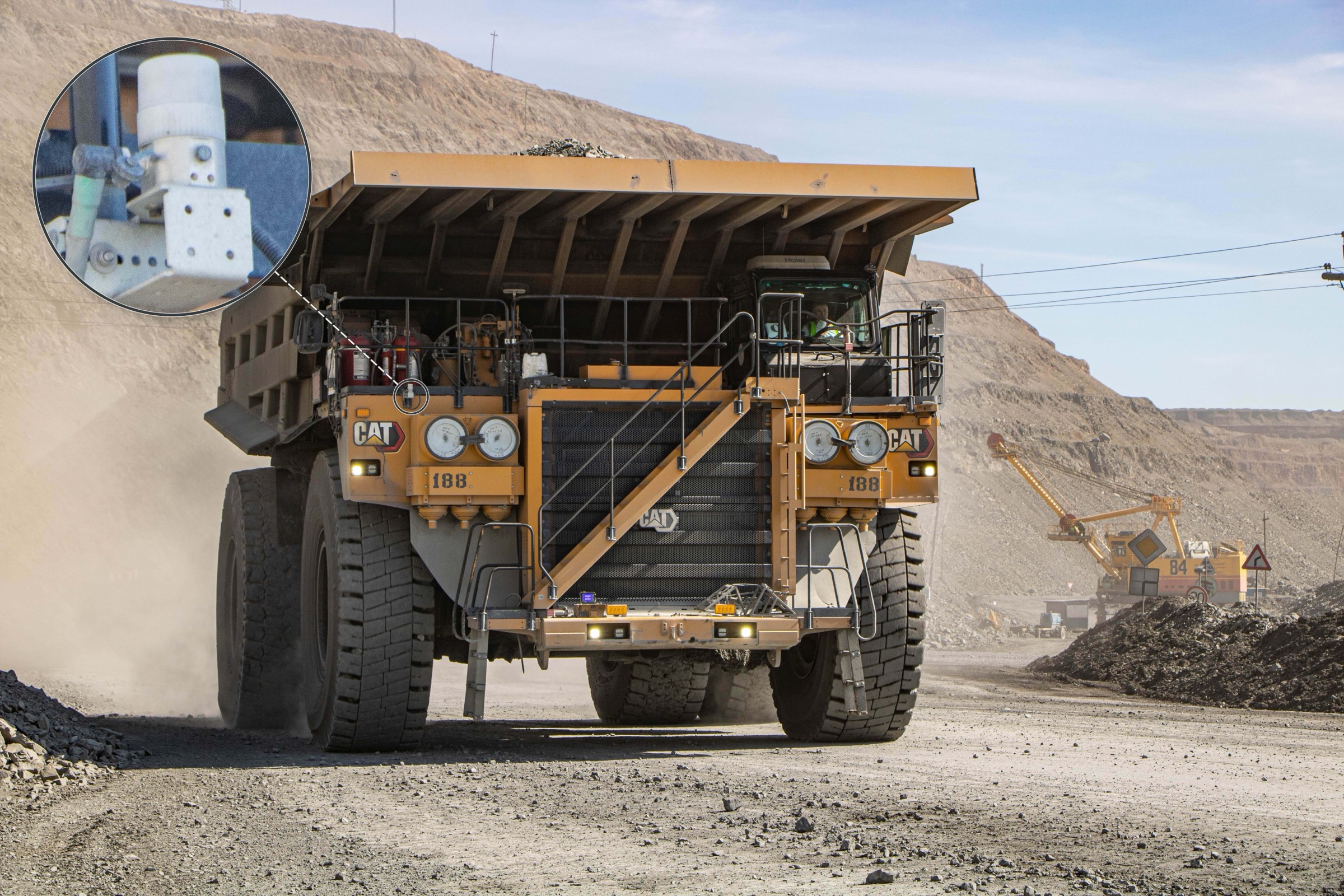
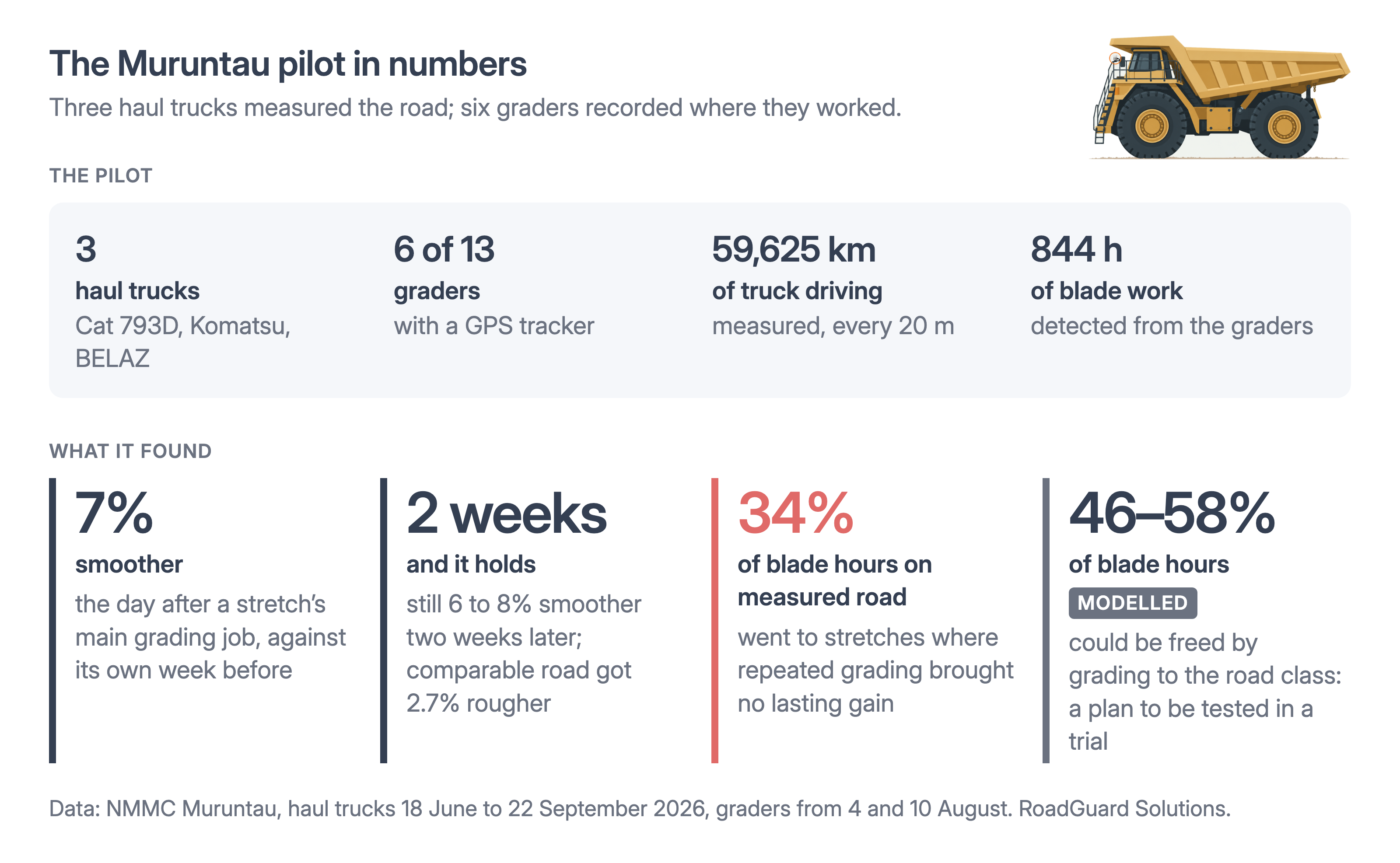
Figure 1. A RoadGuard unit (inset) on Cat 793D haul truck 188 at Muruntau. Photo: NMMC.
Figure 2. The pilot in numbers.
Figure explained in text

Three haul trucks measured 59,625 km; six of 13 graders carried GPS trackers. A main grading job left the road 7% smoother the next day and 6–8% smoother two weeks later. 34% of blade hours on measured road went to stretches without lasting improvement. The 46–58% potential reduction in blade hours is modelled, not an achieved saving.

Haul road quality is critical to the bottom line

NMMC’s Muruntau mine in Uzbekistan is one of the largest open-pit gold mines in the world: 120 km of haul roads, more than 180 haul trucks and 13 graders.

A significant portion of a haul truck’s diesel fuel goes into overcoming rolling resistance, which rises as the road gets soft, rutted or bumpy (Thompson and Visser, 2003). Rolling resistance also limits a loaded truck’s speed on a climb, so road quality affects cycle times and total production.

The challenge is knowing, day by day, which road is good, which is not, and where a grader adds the most value.

Why grading is hard to manage

Every day, a mine decides where its graders go, in one of three ways:

  • Ad hoc: the grader goes where a driver sees a problem, often once it already hurts productivity.
  • Scheduled: each section is bladed on a fixed rhythm, which overgrades some sections and undergrades others.
  • Managed: each section is bladed when its condition, together with its traffic, calls for it. This needs an objective, fast and continuous measure of road quality (Thompson et al., 2003).

At Muruntau, a joint team, the tyre engineer among them, inspects every haul road by eye each Tuesday and lists the sections that need repair in a formal report. The pit-section heads give the grader operators their tasks at the start of each shift; during the shift, drivers’ requests reach them by radio or telephone. A request names the place as the pit map does, for example “from the circle to the second mill”.

The full field study · PDF

Continue with the full article.

Download the complete article with every finding, chart and the proposed grading strategy. Leave your name and email and we’ll email you a link to download the PDF.

International Mining · November/December 2026 · pp. 32–35
Full study and methodology available by email.

Industrial experience. Built into RoadGuard.

Meet IMBU

RoadGuard Solutions is operated and run by IMBU B.V., a team with 15+ years of experience building industrial IoT solutions.

Vibration waveform analytics is our speciality. We analyse compressor vibration to detect signs of wear and track the position and movement of offshore hoses. RoadGuard applies the same expertise to your haul roads, reading road condition from the vibrations of the trucks that drive them every day.

  • Sensors & electronics
  • Embedded software
  • Vibration analytics
  • Field experience